
Labs First: Why We Won't Start a Weight Program Without Baseline Bloodwork
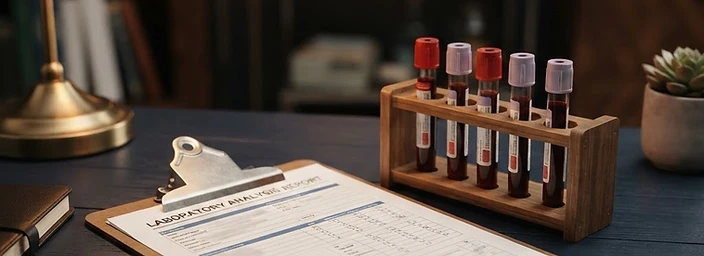
When a new client signs up for our weight-management program, the first step surprises some of them: not medication, not a meal plan — a labs panel. There's a reason it's non-negotiable, and it's worth explaining openly, because it's the difference between a weight program and a prescription vending machine.
Reason One: Safety
GLP-1 therapy and any serious weight program affect real physiology — blood sugar, kidney function, gallbladder risk, and more. Starting medication without knowing a client's baseline is prescribing blind. The FDA's GLP-1 guidance assumes clinical workup; we don't skip what regulators assume. And the NIDDK's clinical resources are explicit that obesity treatment should account for comorbidities — which you can only do if you've actually looked.
Reason Two: Hidden Biology
Here's the clinical truth that 'just eat less' advice ignores: weight is hormonal. Hypothyroidism, insulin resistance, PCOS, low testosterone, chronic cortisol elevation — any of these can quietly stall weight loss regardless of effort. We've had clients arrive after years of self-blame whose labs revealed a thyroid panel that finally explained everything. This is why our labs program includes the endocrine and metabolic markers most basic physicals skip: full thyroid panels, fasting insulin, HbA1c, hormones, and inflammation markers.
Reason Three: Measuring What Works
A baseline does something else just as important: it makes the program honest. Twelve weeks in, we re-check — and we can see fasting insulin improving, HbA1c trending down, lipids shifting — not just the scale. The CDC's obesity treatment framework emphasizes metabolic health, not just weight, as the actual goal. Clients who see their numbers move stay in programs. Data is the best accountability tool we have.
What the Baseline Actually Looks Like
For weight-program clients we order a focused panel: comprehensive metabolic panel, lipid panel including ApoB, full thyroid workup, HbA1c and fasting insulin, hormones where indicated, vitamin D and B12, and inflammation markers. It's covered in the program structure, reviewed with you line by line in a lab review consultation, and repeated at intervals so progress is visible. For the GLP-1 candidates among them, this is also how eligibility is confirmed properly — the criteria covered in my GLP-1 primer.
The Takeaway
If a weight program will start you without labs, it's guessing — with your physiology. We'd rather look first, treat second, and measure throughout. If that approach sounds like what you've been missing, book a consultation and let's see what your biology says before we change anything.
Jason Ward, RN
Chief Clinical Officer, Summit Elite IV & AestheticsJason Ward, RN is the co-founder and Chief Clinical Officer of Summit Elite IV & Aesthetics. A registered nurse with deep experience in infusion therapy and clinical operations, he writes about the science behind IV hydration, NAD+ and Niagen therapy, and what safe, concierge care actually looks like.