NAD+: The Molecule Behind Cellular Energy, Aging, and Recovery
If you've heard the word 'longevity' in the last five years, you've heard three letters after it: NAD. It's the most requested advanced service in our clinic and the most misunderstood. So let's do this properly — what NAD+ actually is, what the science actually says, and where the honest limits are. (For how we deliver it, see our NAD & Niagen program.)
What NAD+ Actually Is
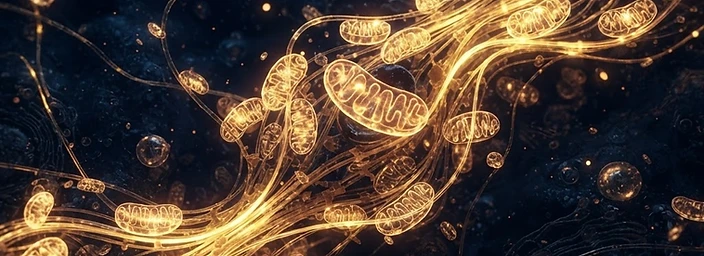
Nicotinamide adenine dinucleotide is a coenzyme — a helper molecule — present in every cell of your body. Its day job is unglamorous and essential: it shuttles electrons between molecules in the reactions that convert food into cellular energy. No NAD+, no ATP. It's also a required cofactor for sirtuins, the enzyme family that regulates cellular repair, inflammation control, and the biology of aging itself, as the National Institute on Aging frames it. Every repair, every energy transaction, every stress response in your cells runs through it.
The Decline Problem
Here's the part that made NAD famous: levels fall with age. By midlife, your NAD+ pool is measurably smaller than it was at 25 — and the decline is associated with exactly the things clients come to us about: fatigue that sleep doesn't fix, slower physical recovery, and reduced resilience to stress. The published research on NAD+ and aging links declining NAD to metabolic change, inflammation, and age-related functional decline across a large body of animal and human studies.
What Supplementation Can — and Can't — Do
The honest summary: raising NAD+ levels is achievable, and mid-life adults often report better energy, recovery, and sleep quality. What's not established: that NAD therapy extends human lifespan. I tell every client the same thing — we're supporting cellular function, not promising immortality. For a clinician-guided approach, most of our clients start with an NAD Injection or a lower-dose infusion and titrate up; PMC's review literature is the best place to read the primary science yourself.
NAD, Niagen, and the Precursor Path
There are two ways to raise NAD+: infuse it directly, or supply a precursor molecule your body converts into NAD+ on its own. That's what Niagen (nicotinamide riboside) is — and we offer Niagen IV therapy for clients who want the precursor route. I cover how the two paths compare in NAD Injections vs. NAD+ Infusions, and for the deepest account of the experience itself, read my session diary of a 500 mg infusion.
Who It's Really For
Our best-fit NAD clients are 35–65, high-performing, sleep-decent, and chasing a specific deficit: recovery speed, energy resilience, or healthy-aging support. It pairs naturally with a labs panel — we can actually measure your NAD+ level and re-check it over time, which is the only honest way to know what a protocol is doing. And per the FDA's guidance on wellness claims, any practice promising more than that is selling you something.
The Takeaway
NAD+ is real biochemistry, not a trend word — your energy, repair, and resilience all flow through it. If that describes what you're missing, book a session and let's find the right dose and format for you. And if you want the full context of our cellular-wellness philosophy, it lives on the NAD page.
Jason Ward, RN
Chief Clinical Officer, Summit Elite IV & AestheticsJason Ward, RN is the co-founder and Chief Clinical Officer of Summit Elite IV & Aesthetics. A registered nurse with deep experience in infusion therapy and clinical operations, he writes about the science behind IV hydration, NAD+ and Niagen therapy, and what safe, concierge care actually looks like.