
Why You Should Check Your Labs More Often Than Your Oil
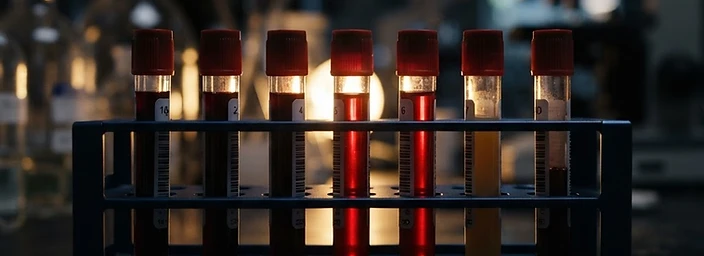
Here's a question I ask every client who's on the fence about labs: how old is your last complete bloodwork? Not the finger-stick at a screening event — a real panel, interpreted by a clinician, with your history in view. For most adults the answer is somewhere between 'a few years' and 'never.' Yet those same people wouldn't dream of skipping oil changes on a car they plan to keep.
Your Body's Dashboard Is Worse Than Your Car's
Your car has an oil light, a temperature gauge, a check-engine system. Your body has something crueler: homeostasis — the ability to compensate until it can't. Thyroid function can erode for years before fatigue becomes undeniable. Blood sugar drifts upward quietly. The CDC's chronic-disease data shows how commonly the major conditions of midlife — diabetes, cardiovascular disease, thyroid disorders — develop silently over years. By the time symptoms announce themselves, the ship has been taking on water for a long time.
What a Good Panel Actually Reveals
This is why we built our labs program around 100+ markers across every body system: endocrine, metabolic, cardiovascular, nutritional, immune, liver and kidney, and cellular health. A well-chosen panel tells you where you stand on the things that matter most to how you feel this year and your trajectory for the next decade — vitamin D and B12 status, thyroid markers, ApoB and inflammation, HbA1c, hormones, and NAD+ levels. The NIH's research programs increasingly frame early detection as the highest-leverage move in medicine; labs are where that happens.
The Two Lab Habits Worth Building
Habit one: a broad annual baseline. Once a year, everything, so trends — not snapshots — become the signal. A single value of 5.6 on HbA1c means little; three years of 5.4 → 5.6 → 5.9 tells a story you can still redirect. The American Heart Association's prevention resources make the same case for cardiovascular markers specifically. Habit two: targeted re-checks when something's being worked on — re-test vitamin D after supplementing, re-test lipids after changing diet or starting therapy. Medicine you don't measure is just guessing with confidence.
Why Concierge Labs Feel Different
The usual objection isn't the needle — it's the experience. Waiting rooms, results in a portal with no context, a ten-minute follow-up if you're lucky. That's what our lab review process was built to fix: we order, we draw, and then a clinician sits down with you and explains what the numbers mean for your actual life. For our weight-management clients, baseline labs are the mandatory first step of the program — the reasoning is in this article.
The Takeaway
You can't manage what you never measure, and your body doesn't come with warning lights. Check your labs more often than your oil — the engine is harder to replace. Start at the labs page or book a session and tell us you want the full picture.
Jason Ward, RN
Chief Clinical Officer, Summit Elite IV & AestheticsJason Ward, RN is the co-founder and Chief Clinical Officer of Summit Elite IV & Aesthetics. A registered nurse with deep experience in infusion therapy and clinical operations, he writes about the science behind IV hydration, NAD+ and Niagen therapy, and what safe, concierge care actually looks like.